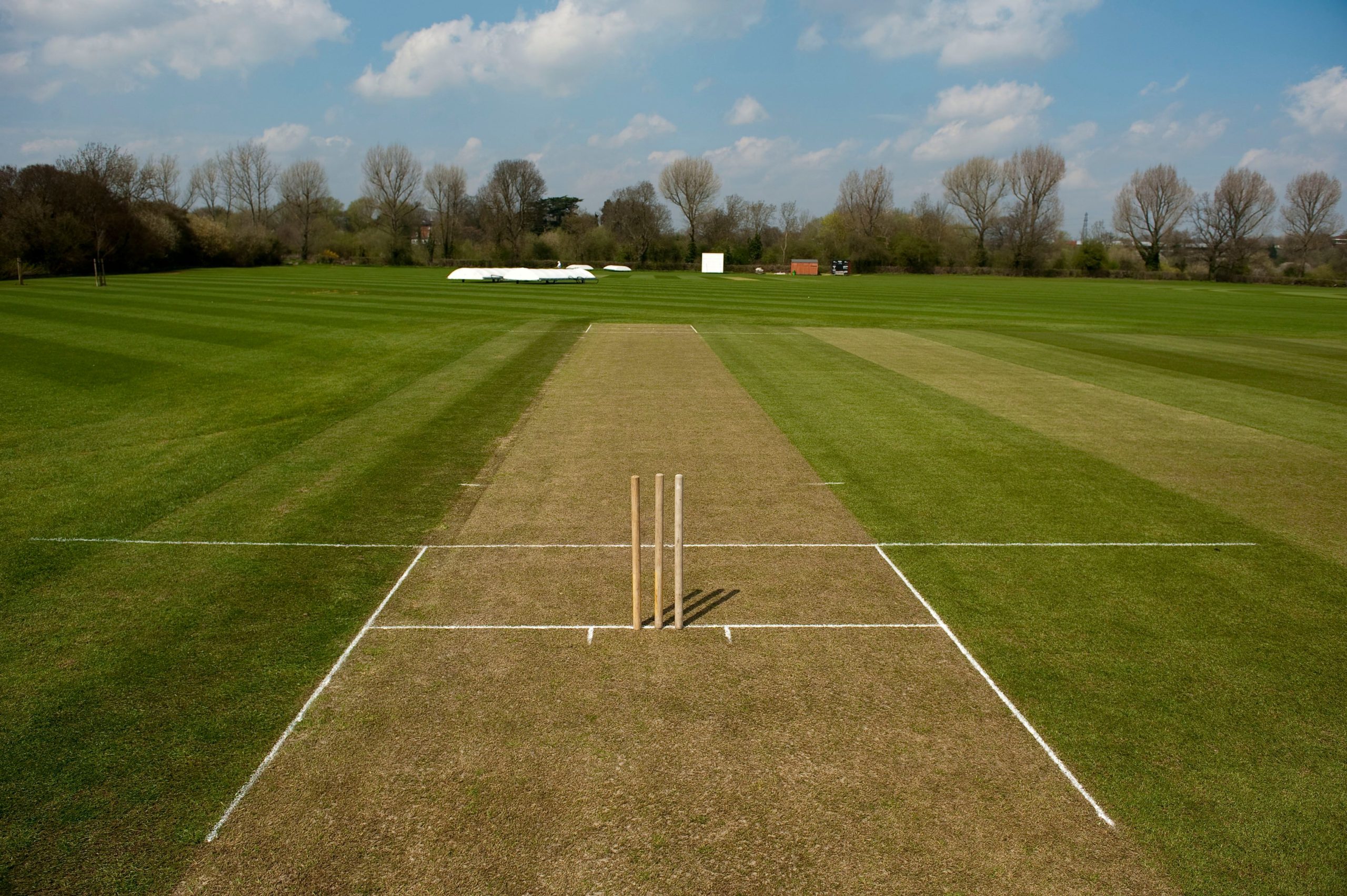
A standard cricket pitch measures 22 yards (66 feet or 20.12 metres) in length and 10 feet (3.05 metres) in width. These dimensions apply to senior cricket across Test matches, One Day Internationals (ODIs) and T20 Internationals.
The cricket pitch is the central playing area where bowlers deliver the ball and batters defend or score runs. Its exact dimensions determine the distance between the wickets, the positioning of the creases and the playing conditions.
But how is the 22-yard measurement calculated? What is the distance between the two popping creases? Are pitch dimensions different in T20 and Test cricket?
Let’s explore the official cricket pitch measurements, crease markings and regulations under the Laws of Cricket.
Cricket Pitch Length in Feet, Metres and Yards
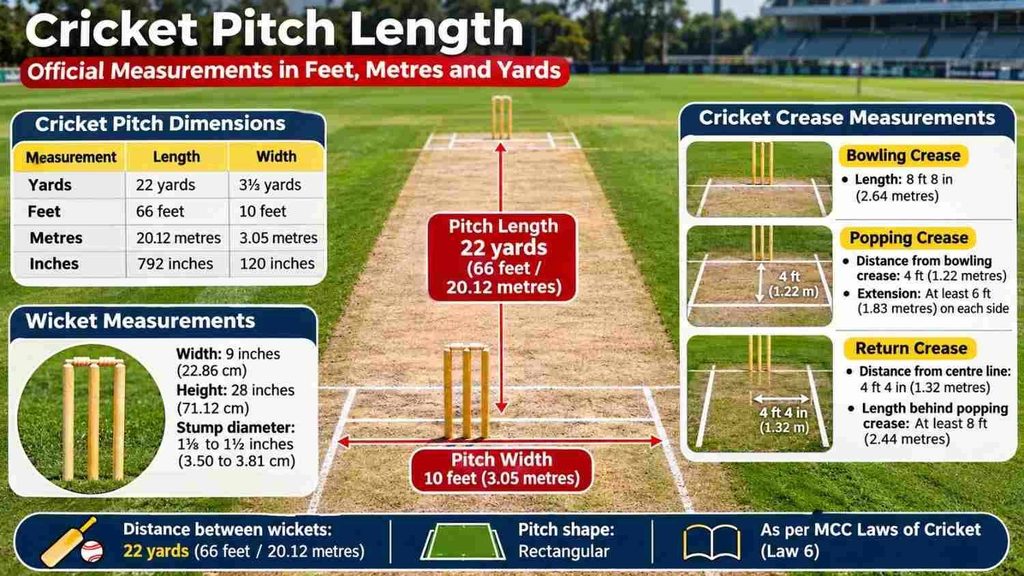
The official cricket pitch length is 22 yards, equivalent to 66 feet or approximately 20.12 metres. Its width is 10 feet, equivalent to approximately 3.05 metres.
These measurements are specified under Law 6 of the Marylebone Cricket Club (MCC) Laws of Cricket.
Here is a comparison of the standard cricket pitch dimensions:
| Measurement | Length | Width |
| Yards | 22 yards | 3⅓ yards |
| Feet | 66 feet | 10 feet |
| Metres | 20.12 metres | 3.05 metres |
| Inches | 792 inches | 120 inches |
The length and width define the rectangular playing surface. The bowling creases mark its two ends, while imaginary lines determine its side boundaries.
What Is the Official Cricket Pitch Length According to MCC Laws?
The Marylebone Cricket Club (MCC) is the custodian of the Laws of Cricket. The 2017 Code, Fourth Edition (2026), effective from 1 October 2026, specifies the standard cricket pitch dimensions under Law 6.
According to Law 6.1:
- Length: 22 yards (20.12 metres).
- Width: 10 feet (3.05 metres).
- Side boundaries: Imaginary lines parallel to the centre line joining the two middle stumps, positioned 5 feet (1.52 metres) away on each side.
- Shape: Rectangular.
The length is measured between the two bowling creases, not between the popping creases or the outer edges of the playing field.
This distinction is important when measuring a cricket ground. The pitch is a specific rectangular playing area, while the surrounding outfield and boundary have separate measurements.
What Does the Word “Pitch” Mean Under the 2026 MCC Laws?
The 2026 Fourth Edition clarifies the meaning of the word “pitch”. MCC has removed the word where it refers to anything other than the 22 yards between the stumps.
The updated terminology also replaces “pitching” with “landing” or “first landing” when describing the point where the ball makes contact with the ground.
This clarification establishes a more precise definition of the cricket pitch under the latest Laws of Cricket.
Cricket Pitch Markings and Crease Measurements
A cricket pitch contains several white markings that determine the legal positions of bowlers and batters. These lines are essential for decisions involving no-balls, run-outs and stumpings.
The three main types of creases are the bowling crease, popping crease and return crease. There are two bowling creases, two popping creases and two return creases at each end of the pitch.
1. Bowling Crease
The bowling crease marks the end of the cricket pitch and passes through the centre of the three stumps. Its back edge defines the end of the pitch.
According to MCC Law 7.2, the bowling crease measures 8 feet 8 inches (2.64 metres) in length.
The two bowling creases are positioned at opposite ends of the pitch, 22 yards apart.
2. Popping Crease
The popping crease is marked parallel to the bowling crease, 4 feet (1.22 metres) in front of it.
It plays an important role in determining whether a batter is inside their ground and whether a bowler has delivered a legal ball.
The crease must extend at least 6 feet (1.83 metres) on either side of the imaginary line joining the centres of the two middle stumps.
Historically, the popping crease was positioned 46 inches in front of the wicket under the 1744 Laws of Cricket. This measurement was different from today’s standard 4-foot distance.
3. Return Crease
Return creases are marked at right angles to the popping crease. They help determine whether a bowler’s back foot lands legally during delivery.
The inside edges of the return creases are positioned 4 feet 4 inches (1.32 metres) on either side of the centre line of the middle stumps.
Each return crease extends at least 8 feet (2.44 metres) behind the popping crease.
Here is a comparison of the main crease measurements:
| Pitch marking | Official measurement |
| Bowling crease length | 8 ft 8 in (2.64 m) |
| Popping crease distance from bowling crease | 4 ft (1.22 m) |
| Minimum popping crease extension | 6 ft (1.83 m) on each side |
| Return crease distance from centre line | 4 ft 4 in (1.32 m) |
| Minimum return crease length behind popping crease | 8 ft (2.44 m) |
How Far Apart Are the Two Wickets in Cricket?
The two sets of wickets are positioned at opposite ends of the pitch. The distance between their middle stumps is 22 yards (66 feet or approximately 20.12 metres).
Each wicket consists of three wooden stumps and two bails.
The official wicket measurements are:
| Wicket component | Measurement |
| Distance between middle stumps | 22 yards (20.12 m) |
| Width of each wicket | 9 inches (22.86 cm) |
| Height of stumps | 28 inches (71.12 cm) above the playing surface |
| Stump diameter | 1⅜ to 1½ inches (approximately 3.50 to 3.81 cm) |
The tops of the stumps must be 28 inches (71.12 cm) above the playing surface, as specified under the Laws of Cricket.
The popping crease is positioned 4 feet in front of each bowling crease. Therefore, the distance between the two popping creases is approximately 58 feet (17.68 metres).
The calculation is:
66 feet − 4 feet − 4 feet = 58 feet.
This is an important distinction. The official pitch length remains 66 feet, but batters running between the popping creases cover approximately 58 feet from one end to the other.
Is Cricket Pitch Length the Same in Test, ODI and T20?
Yes. Standard senior cricket uses the same 22-yard pitch length and 10-foot pitch width across Test matches, One Day Internationals and T20 matches.
The format changes the match duration, number of overs and certain playing conditions. It does not change the standard pitch dimensions.
| Cricket format | Pitch length | Pitch width |
| Test Cricket | 22 yards | 10 feet |
| One Day International | 22 yards | 10 feet |
| T20 International | 22 yards | 10 feet |
| First-Class Cricket | 22 yards | 10 feet |
| Domestic T20 | 22 yards | 10 feet |
These are standard senior cricket measurements. Individual competitions may introduce additional playing conditions, but the basic pitch dimensions remain the same.
Does Cricket Pitch Length Change for Junior Cricket?
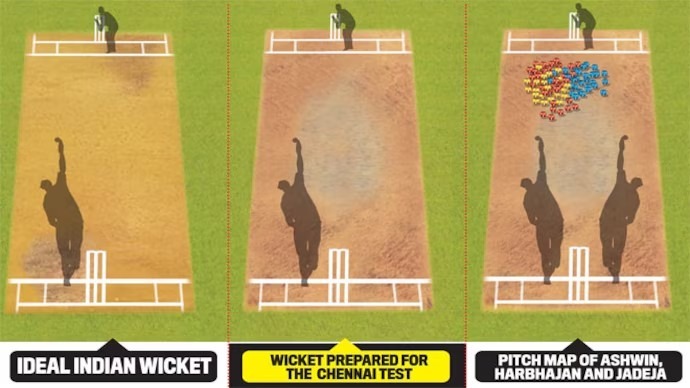
Source Image: IndiaToday
Yes. Junior cricket can use shorter pitch dimensions depending on the players’ age groups and the regulations established by the national cricket governing body.
The MCC does not prescribe one fixed pitch length for every junior competition.
Under the 2026 MCC Laws:
- Law 6.6: The national governing body determines the appropriate pitch length for junior cricket.
- Law 8.4: The national governing body determines the dimensions of junior stumps and bails.
Junior cricket may therefore use shorter pitches and differently sized wickets depending on the age group and competition regulations.
These adjustments allow younger players to develop their batting, bowling and running skills on a playing surface suited to their age and ability.
However, the standard senior cricket pitch remains 22 yards long.
What Is the Minimum Length of an Artificial Cricket Pitch?
Not every cricket match takes place on a natural grass surface. Schools, training centres and local cricket grounds often use artificial or non-turf pitches.
MCC Law 6.5 specifies the minimum dimensions for a non-turf pitch:
| Measurement | Minimum size |
| Length | 58 feet (17.68 metres) |
| Width | 6 feet (1.83 metres) |
These measurements apply specifically to the artificial playing surface. They should not be confused with the standard 22-yard natural turf cricket pitch.
The 58-foot minimum artificial pitch length matches the distance between the two popping creases on a standard senior cricket pitch. Both measurements cover the running area between the creases.
Artificial pitches provide a practical option for grounds where maintaining a natural turf surface is difficult.
How Is a Cricket Pitch Measured?
Measuring a cricket pitch correctly is important when preparing a ground for a competitive match. Incorrect markings can affect bowling actions, batting positions and umpiring decisions.
Follow these steps to measure a standard senior cricket pitch:
- Identify the centre line: Establish the positions of the two middle stumps at opposite ends.
- Measure 22 yards: Establish the standard 22-yard distance between the two bowling creases.
- Mark the bowling creases: Draw an 8 feet 8 inches line at each end through the centre of the three stumps.
- Mark the popping creases: Draw parallel lines 4 feet in front of each bowling crease.
- Add the return creases: Mark the return lines at right angles to the popping creases, following the official measurements.
- Check the width: Ensure the playing area measures 10 feet across, with imaginary side boundaries 5 feet from the centre line on either side.
Before the toss and throughout the match, the umpires must check that the crease markings are correct and the wickets are properly positioned.
For official matches, ground authorities are responsible for selecting and preparing the pitch before play. The umpires control its use and maintenance during the match.
Why Is a Cricket Pitch 22 Yards Long?
The 22-yard cricket pitch measurement dates back to the 1744 Laws of Cricket, which already specified a distance of 22 yards between the wickets.
A commonly cited historical explanation connects this measurement to one chain, an old English land-surveying unit equal to 22 yards (66 feet). Ten chains make one furlong, and 80 chains make one mile.
However, the exact historical reason for choosing 22 yards has not been conclusively established.
The 1744 Laws also specified different wicket dimensions from those used today. The stumps were 22 inches high, with a six-inch bail, compared with the modern stump height of 28 inches.
This shows that although the standard pitch length has remained 22 yards, the wicket dimensions have changed over time.
Conclusion
The standard cricket pitch measures 22 yards (66 feet or 20.12 metres) in length and 10 feet (3.05 metres) in width. These dimensions apply to senior cricket across Test matches, ODIs and T20 Internationals.
The bowling, popping and return creases also have specific measurements under the MCC Laws of Cricket. Junior cricket may use shorter pitches and differently sized wickets according to national governing body regulations, while artificial pitches have separate minimum dimensions.
Understanding these measurements helps players, coaches, ground staff and cricket fans better understand how the playing area is designed.
Whether it is an international match or a local cricket competition, accurate pitch measurements remain essential for fair and consistent gameplay.
Frequently Asked Questions
A standard cricket pitch is 66 feet long, equivalent to 22 yards or approximately 20.12 metres. The measurement is taken between the two bowling creases.
The official measurement is 22 yards, which equals approximately 20.12 metres. It is commonly rounded to 20 metres in casual discussions.
The standard cricket pitch is 10 feet (3.05 metres) wide. Its side boundaries are defined by imaginary lines positioned 5 feet from the centre line of the middle stumps on either side.
Yes. Test cricket, One Day Internationals and T20 Internationals use the same standard pitch length of 22 yards and width of 10 feet.
The distance between the two popping creases is approximately 58 feet (17.68 metres). Although the full pitch measures 66 feet, the popping creases are positioned 4 feet in front of the bowling crease at both ends.